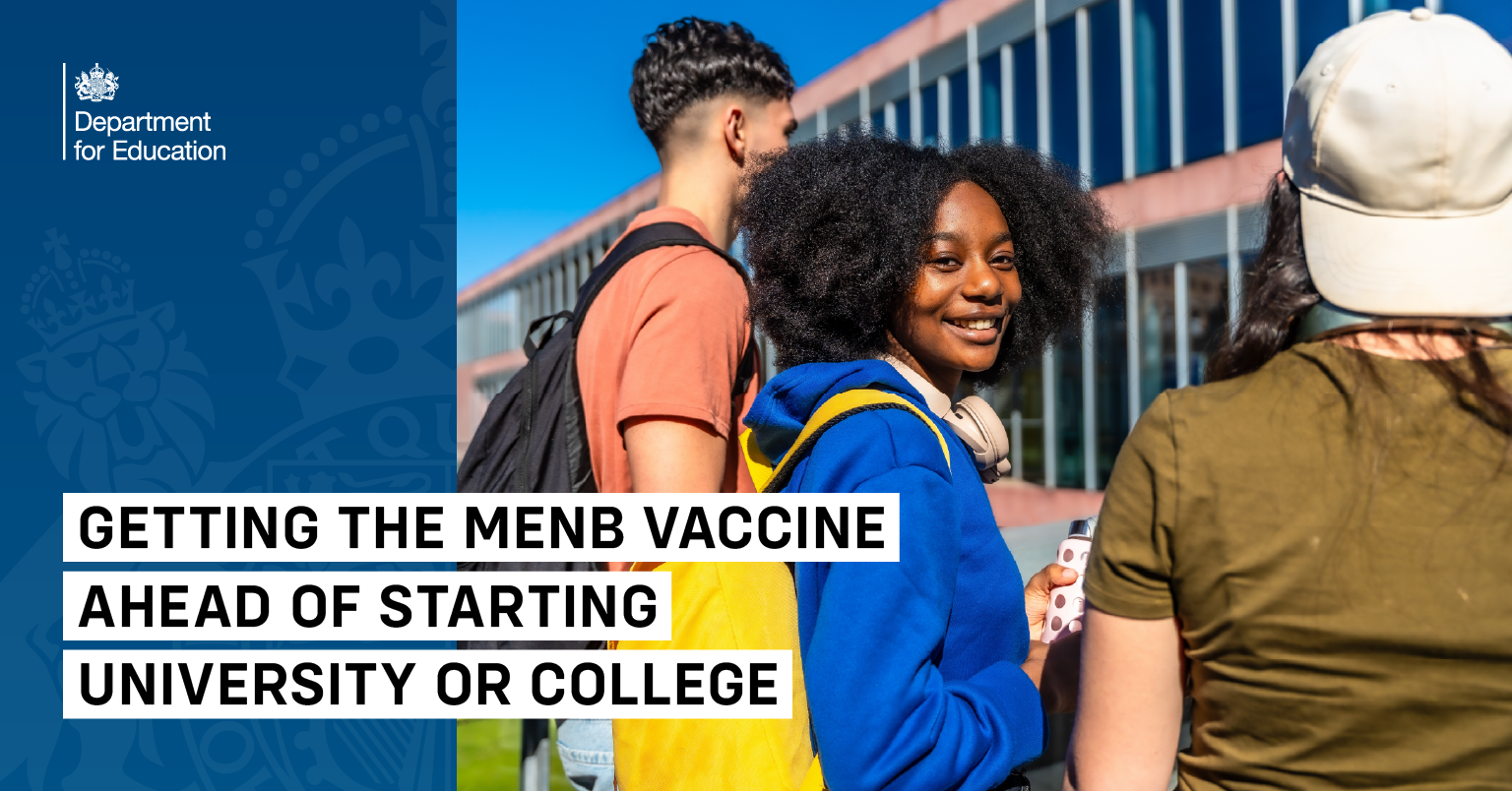
The Government is introducing a free one-off, time-limited MenB (meningococcal B) vaccination programme from July 2026 for young people.
You are eligible if:
- You were born between 1st September 2007 to 31st August 2008.
- You were born on or after 21 July 2001 and will be a first-time university student, including international students, in the 2026/27 academic year.
- You were born on or after 21 July 2001 and will be a first-time further education student living in halls or shared accommodation at specific settings in the 2026/27 academic year (check this list of eligible residential further education settings)
What is MenB?
Meningococcal disease is a serious but uncommon illness caused by meningococcal bacteria. It can lead to meningitis - inflammation of the lining of the brain - and sepsis. Meningococcal disease is life-threatening and can result in life-changing disabilities such as amputations, hearing loss, and brain damage. It is fatal in around 10% of cases.
Why is it important for students starting university or living at college to get the MenB vaccine?
Getting two doses of the MenB vaccine before the autumn term is one of the most important things young people can do to protect themselves. The second dose provides the full protection, so it is essential to have both.
Students are particularly at risk from contracting diseases such as MenB as they mix with large numbers of other students from around the country and overseas.
There was a large and fast-growing outbreak of MenB earlier in 2026, plus further clusters. This means there is uncertainty about current risk levels, and so we’re taking this action now to protect those most at risk.
How much does the vaccine cost and how can I get them?
The vaccination is a free NHS programme to those eligible, including international students, regardless of their nationality or immigration status.
Those born from 1st September 2007 to 31st August 2008 will be contacted to book an appointment through the National Booking Service; other eligible people will be access to access vaccination via a walk-in appointment at participating pharmacies. You can find your nearest pharmacy here.
It is important that everyone eligible has two doses of the vaccine.
When should I get my vaccine doses?
The vaccination will be available in England from July 2026, and it's important to get a first dose as early as possible, ideally well before the autumn term begins. The second dose should be given at least 28 days after the first; it then takes a further 2 weeks for the body to build a good level of immunity. That means the whole process takes around 6 weeks from start to finish.
What proof do I need to provide to show I am eligible for vaccine?
More detail will be provided on this soon.
Can individuals who are away over summer still access the vaccine?
Yes, the first dose will be available until 31 December 2026 and the second dose until 31 March 2027. This is so people who cannot get vaccinated before the autumn term starts can still come forward.
However, we strongly advise people to get vaccinated at the earliest opportunity from July to get the two doses required as soon as possible. The risk is greatest in autumn, so protection ahead of then is recommended. The doses are given a minimum of 28 days apart.
Why is the vaccine not being offered to all teenagers and students?
The aim of this one-off programme is to protect those at greatest immediate risk from MenB. Based on the available data, UKHSA estimates that the relative risk of invasive MenB disease in first year university students was 7.4 times greater than in their peers. This is because of the close mixing at university, and the higher chance of being exposed to new MenB strains that they have not already built-up immunity to.
What if I’m an international student?
Eligible international students can access the vaccine regardless of their nationality or immigration status. The vaccination offer is free of charge as an NHS programme to all those eligible. Given that two doses are needed to get full protection and the greater risk in the autumn term, international students are advised to seek vaccination in their countries of origin where possible. However, MenB vaccination is not mandatory for entry to the UK.
Who is eligible in residential further education settings?
Students at further education colleges aged under 25 who are living in further education accommodation or halls of residence and are attending for the first time in the 2026/27 academic year will be included in this programme. We encourage people in this group to come forward for vaccination from July.
A list of the relevant residential further education settings from which some students (those living in further education accommodation or halls of residence) will be eligible for vaccination will be published in due course.
What if I am currently not in education, or don’t know my plans in the next academic year?
All those born between 1st September 2007 to 31st August 2008 are eligible for the free vaccine. For those who are under 25 and decide to become a student at a setting that means they are eligible, the first dose will be available until 31st December 2026 and the second dose until 31st March 2027
What can you do to protect yourself from meningitis if you’re not eligible for the MenB vaccine?
Meningitis has many causes. If you are not eligible for the MenB vaccine, you should still make sure you are up to date with the MMR and MenACWY vaccines, which help protect against other causes of meningitis.
The MenACWY vaccine is offered in school, usually in Year 9. If you have missed the MenACWY vaccine in school, you can get a free catch-up vaccine from your GP surgery until your 25th birthday.
It is never too late to catch up on the MMR vaccine. Anyone who missed MMR vaccines as a child can get a free catch-up vaccine at any age from their GP surgery.
What are the symptoms of MenB?
Symptoms include:
- A blotchy rash that doesn’t fade when a glass is rolled over it.
- Fever.
- Headache.
- Aching muscles and joints and a stiff neck.
- Vomiting and diarrhoea.