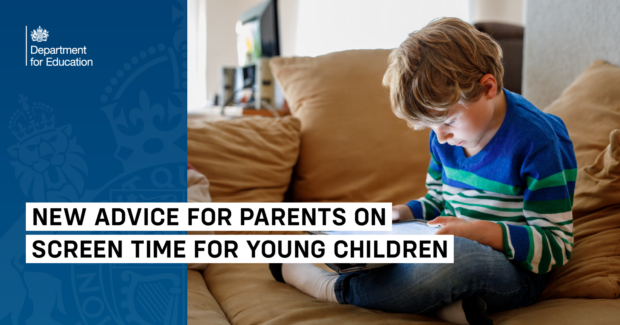
Screens are part of everyday life for young families. With 98% of two-year-olds watching screens daily, avoiding them altogether isn't realistic — but managing them well can make a difference to how young children grow and develop. Here's what you need to know about the government's new free guidance for parents.
Why is the government publishing advice on screen time now?
Over a thousand parents were asked what support they needed, and the message was clear: families want practical, non-judgemental guidance on how much screen time is too much and how to limit any negative impact on their children. This new advice is the government's response to that call.
It has been developed with input from parents and an expert panel led by Children's Commissioner Dame Rachel de Souza and Professor Russell Viner, a paediatrician and specialist in children's health.
Why does screen time matter for children under five?
Ninety per cent of children's development happens before the age of five. Large amounts of unmanaged screen use can crowd out the activities that matter most at this stage — things like sleep, physical play, creative activities and time spent talking with parents and carers.
Research by early years charity Kindred Squared found that 28% of children starting reception are unable to use a book properly, with some trying to swipe or tap physical pages like a tablet screen. Giving children time away from screens in their early years helps build the social, emotional and language skills they need to start school.
What does the guidance recommend?
For children under two, the guidance recommends avoiding screen time other than for shared activities that encourage bonding, interaction and conversation. For two- to five-year-olds, parents are advised to aim for no more than one hour of screen time a day and to keep screens out of mealtimes and the hour before bed.
When it comes to content, slow-paced, age-appropriate programmes can support early childhood development better than fast-paced, social media-style videos. Parents are also encouraged to watch screens together with their children — talking, asking questions and engaging with what's on screen. The evidence shows this kind of co-viewing is linked to better cognitive development than children watching alone.
The guidance also makes clear that these time limits shouldn't apply in the same way to screen-based assistive technologies used to support children with special educational needs and disabilities.
Are there simple things families can do to cut down on screen time?
Yes. The guidance suggests straightforward swaps to help build healthier habits — like reading a bedtime story instead of watching a programme before sleep, or playing a simple game at mealtimes rather than using a device. These aren't about perfection or judgement, but about giving parents the confidence to make small changes that can have a real impact.
Where can parents find the guidance?
The guidance is free and available on the Best Start in Life website. It will also be available in person through Best Start Family Hubs, hundreds more of which are opening across the country, bringing parenting advice, services and community support closer to the families who need them most.